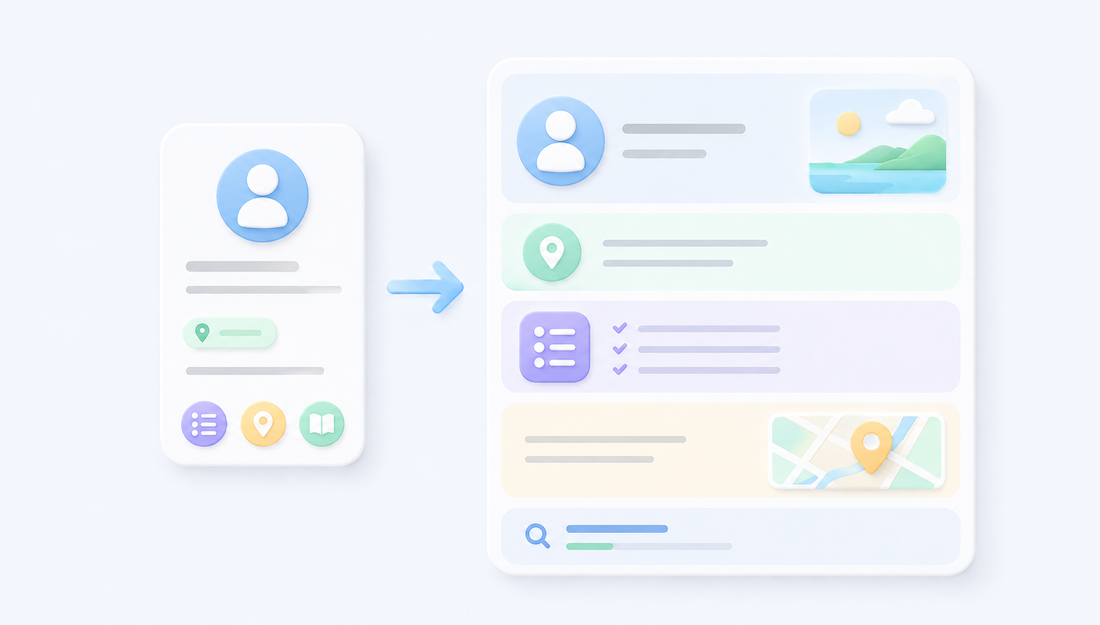
Member profiles can function as SEO landing pages when each page targets a clear topic, contains useful information beyond basic contact details, and gives search engines enough context to understand who the member is, what they offer, and where they operate. The goal is not to stuff profiles with keywords. It is to turn each profile into a useful destination that can answer a specific searcher's question.
For directory websites, this creates an important advantage: instead of relying only on category and location pages for organic traffic, hundreds or thousands of individual member pages can potentially rank for long-tail searches tied to services, specialties, businesses, professionals, and locations.
Start With a Search Intent for Each Profile
Think Beyond the Member's Name
A profile titled only "Johnson & Smith" gives search engines very little context unless the business already has strong name recognition. A more descriptive page can clarify what the member does while still keeping the business name prominent.
Weak: Johnson & Smith
Better: Johnson & Smith — Family Law Attorneys in Austin, Texas
The second version establishes the entity, service, and location immediately. That makes the page relevant not only for branded searches but also for queries such as "family law attorney Austin" or more specific variations related to the firm's services.
Match the Profile to a Real Search
A strong member page usually focuses on one primary search theme. A wedding photographer profile might target wedding photography in Miami, while a commercial electrician might focus on commercial electrical services in Denver.
Avoid trying to make one profile rank for every possible service. If a member offers "wedding photography, family portraits, product photography, drone photography, events, headshots, and video production," the profile should establish the primary specialty first and organize secondary services clearly below it.
Improve the Profile Title and Page Heading
Use Descriptive Titles Without Making Them Look Spammy
The member's business or professional name should normally remain the primary identifier. The optimization comes from adding useful context, not replacing the member's identity with a string of keywords.
Weak: Best Plumber Cheap Plumbing Emergency Plumbing Miami
Better: Rivera Plumbing — Residential & Emergency Plumber in Miami
The improved version reads naturally while still communicating service type and geographic relevance. This is particularly useful on directories where profile titles can influence the page heading, browser title, search snippets, internal links, or other SEO elements.
Keep Titles Consistent Across the Directory
Directories often become messy when every member uses a completely different naming format. Establishing a profile structure makes pages easier to interpret for both visitors and search engines.
For example, a directory for home-service companies could use a format such as Business Name — Primary Service in Location. A professional directory might use Professional Name — Specialty in Location.
Turn the Profile Description Into Useful Landing Page Copy
Replace Generic Introductions With Specific Information
Many profiles begin with vague statements that contribute little to search visibility or user decision-making.
Weak: We are committed to providing excellent service and putting our customers first.
Better: Rivera Plumbing provides residential plumbing services throughout Miami, including leak repairs, water heater installation, drain cleaning, fixture replacement, and emergency plumbing calls.
The rewritten version immediately answers several useful questions: what the company does, where it works, and which services it provides. Those details also introduce the entities and phrases search engines need to understand the page.
Add Details That Help Someone Choose the Member
Useful profile copy should answer questions a potential customer would naturally ask before making contact. Depending on the directory, that could include specialties, industries served, service areas, years of experience, certifications, project types, languages spoken, appointment options, or customer types.
For example, instead of writing "We work with all types of clients," a consultant profile could say: "Services are designed primarily for independent retailers, local service businesses, and companies with fewer than 50 employees."
Specificity makes the page more useful and can help it match narrower searches that broader category pages may never target.
Build Strong Service and Specialty Sections
Use Structured Fields Instead of Hiding Everything in a Biography
Important information should not exist only inside a large paragraph. Structured profile fields can create clearer relationships between the member and their services, categories, specialties, locations, credentials, and other attributes.
For example, a medical directory could display fields such as Specialty, Conditions Treated, Languages, Insurance Accepted, and Locations. A contractor directory might use Services, Service Area, License Information, and Property Types Served.
Structurally integrated directory platforms can be particularly effective here because the same member data can support profile pages, search filters, categories, location pages, and internal linking without requiring separate systems. Platforms such as Brilliant Directories are examples of this all-in-one model for directory and membership websites.
Give Important Services Their Own Context
A list of services is useful, but a short explanation can create additional relevance. Instead of displaying only "Roof Repair," a contractor profile might include: "Roof repair services include leak detection, damaged shingle replacement, flashing repairs, and storm-damage assessments."
This does not require hundreds of words. Even one useful sentence beneath an important service can clarify what the service includes and help the page match more specific search queries.
Use Location Information Strategically
Specify Where the Member Actually Operates
Location is one of the strongest search signals for many directory profiles, but the information needs to be specific. "Serving the surrounding area" provides much less context than naming the cities, counties, neighborhoods, or regions the member actually serves.
Weak: We serve customers throughout the area.
Better: Services are available throughout Tampa, Clearwater, St. Petersburg, and surrounding communities in Pinellas and Hillsborough counties.
The better version adds geographic entities that can help the profile appear for location-specific searches while also giving visitors useful service-area information.
Avoid Creating Fake Local Relevance
Do not add cities simply because they have search volume. If a member does not serve Orlando, adding "Orlando" repeatedly to the profile creates a poor visitor experience and may weaken the overall quality of the page.
Local optimization works best when the geographic information reflects the member's real service area, office location, or customer base.
Add Original Information That Category Pages Cannot Provide
Give Every Profile a Reason to Exist
A directory with 5,000 profiles that contain only a name, category, and phone number can produce thousands of nearly empty pages. Search engines may decide many of those pages offer little independent value.
A stronger profile includes information that is specific to that member: services, expertise, description, images, credentials, service areas, FAQs, portfolio items, operating details, or other meaningful fields.
The goal is not to reach an arbitrary word count. A 250-word profile containing precise, original information can be more useful than an 800-word profile filled with generic marketing language.
Encourage Members to Avoid Copied Manufacturer or Corporate Text
Members sometimes paste the same biography or company description across their website, social profiles, franchise pages, and directory listings. The information may still be valid, but the directory page becomes more useful when it contains something unique.
For example, ask for a directory-specific description such as: "What types of customers do you most commonly help?" or "Which three services are most frequently requested?" Questions like these naturally produce information that is less likely to be copied from another page.
Create Internal Links That Support the Profile
Connect Profiles to Relevant Categories and Locations
Member pages should not exist as isolated URLs. Internal links from category pages, location pages, search results, related-member sections, and other directory content help search engines discover the profiles and understand how they fit into the site's broader structure.
For example, a profile for a Miami wedding photographer could be linked from Wedding Photographers, Miami Photographers, and a relevant geographic results page. Those connections reinforce the relationship between the member, service, and location.
Use Descriptive Anchor Text Where It Fits Naturally
Internal links are more informative when their anchor text describes the destination. "View profile" is functional, but "View Maria Lopez Photography" or "Miami wedding photographer profile" provides more context when the design allows it.
That does not mean every link should contain a keyword phrase. Navigation should still read naturally for visitors.
Use Reviews, FAQs, and Posts to Expand the Page
Let Member Activity Add Useful Long-Tail Content
Profiles can become richer over time when the directory supports reviews, questions, articles, events, products, properties, or other member-generated content. These elements can introduce additional language related to the member's expertise without forcing everything into the main biography.
For example, customer reviews for a moving company may naturally mention "apartment move," "piano moving," "packing service," or specific neighborhoods. Those phrases provide context that the business description alone may not contain.
Add Frequently Asked Questions Where They Help Decisions
FAQs work best when they answer real pre-contact questions. A profile for a personal trainer might answer "Do you offer in-home sessions?" or "Do you work with beginners?" rather than filling the section with generic questions created only for SEO.
A useful answer might read: "In-home sessions are available within approximately 15 miles of downtown Nashville. Virtual coaching is available outside the local service area."
Avoid the Most Common Profile SEO Problems
Thin Profiles
A page containing only a name, phone number, and category may not provide enough information to justify strong search visibility. Add meaningful profile fields rather than inserting generic paragraphs purely to increase page length.
Duplicate Profiles
Multiple URLs for the same member can divide signals and confuse search engines. This often happens when sites generate different profile URLs through categories, locations, filters, or outdated account records.
Each member should ideally have one primary profile URL, while other directory pages link back to that canonical destination.
Keyword-Stuffed Descriptions
Repeatedly inserting the same service and location makes a profile harder to read without adding meaningful context.
Weak: Miami dentist offering Miami dental services for patients looking for a dentist in Miami.
Better: Dr. Elena Ruiz provides general and cosmetic dentistry in Miami, including preventive exams, restorative treatments, teeth whitening, and clear aligner consultations.
The improved version expands the topic instead of repeating the same phrase.
A Practical Member Profile SEO Checklist
- Use the member or business name as the clear primary identity.
- Add the primary service, specialty, or profession where appropriate.
- Include an accurate city, region, or service area.
- Replace generic biographies with specific descriptions.
- List important services and specialties using structured fields.
- Add credentials, customer types, industries served, or other useful differentiators.
- Encourage original profile descriptions rather than copied company text.
- Connect profiles to relevant category and location pages.
- Include useful reviews, FAQs, posts, or portfolio content when supported.
- Avoid duplicate profile URLs and unnecessarily thin pages.
Frequently Asked Questions
Can Every Member Profile Rank in Google?
No directory should assume that every profile will rank individually. Search visibility depends on competition, page quality, search demand, internal linking, site authority, and how much useful information the profile provides.
The more realistic goal is to create profiles that are eligible to perform well when a relevant search exists, rather than treating every member page as guaranteed organic traffic.
How Much Content Should a Member Profile Have?
There is no ideal word count. A profile should contain enough information to explain who the member is, what they offer, where they operate, and why someone might select them.
For a simple local service provider, a few hundred words plus structured fields may be sufficient. A specialist with multiple services, credentials, FAQs, and portfolio material may naturally require more.
Should Profiles Target the Same Keywords as Category Pages?
They can overlap, but they should serve different search intent. A category page might target "Denver wedding photographers," while an individual profile focuses on a specific photographer, their style, services, coverage area, and specialties.
This creates a useful hierarchy: the category page helps users compare options, while the profile page helps them evaluate one specific member.
Are Member Profiles Better Than Dedicated Landing Pages?
They serve different purposes. A carefully designed member profile is usually strongest for searches related to a specific provider, professional, service combination, or local long-tail query.
Broader commercial topics may still deserve dedicated category, location, or editorial landing pages. The strongest directory SEO structure typically uses all of these page types together rather than expecting one template to handle every search intent.
Turn Profiles Into Useful Search Destinations
The strongest member profiles are not simply database records displayed on a public page. They combine identity, services, geography, expertise, structured information, and supporting content into a page that answers a clear search need.
Start with the profiles that already receive impressions or represent important categories. Improve their titles, descriptions, service details, locations, and internal links first, then apply the same structure across the directory as new members join or existing profiles are updated.